If you want to land a job, there’s one hurdle you’re almost guaranteed to face: the interview.
Hiring managers rarely make decisions based on a resume alone. Instead, they want to meet candidates,
evaluate their skills, and understand what they bring to the table.
That’s why knowing how to prepare for an interview is crucial.
The Competitive Job Market
On average, a single corporate job posting receives 250 resumes. Out of those, only
four to six candidates are typically invited for an interview. Ultimately, just
one person secures the job.
With competition this fierce, proper preparation isn’t just an advantage—it’s a necessity.
How to Prepare for an Interview?
Interviews are the most important round of placements. It is the final metric that determines whether
you are selected or not. Hence, interview preparation is crucial if you are preparing for placements.
Interviews are mainly divided into three rounds:
Technical Interview: Focuses on your coding skills, problem-solving abilities, and domain knowledge.
Managerial Interview: Evaluates your decision-making, leadership, and problem-handling skills.
HR Interview: Tests your communication, confidence, and cultural fit within the company.
Master In-Demand Skills & Accelerate Your IT Career
Python Programming
Master Python from Basics to Advanced.
Machine Learning
Learn ML algorithms, model building, and data-driven decision-making.
Web Scraping
Extract valuable data from websites using BeautifulSoup and Scrapy.
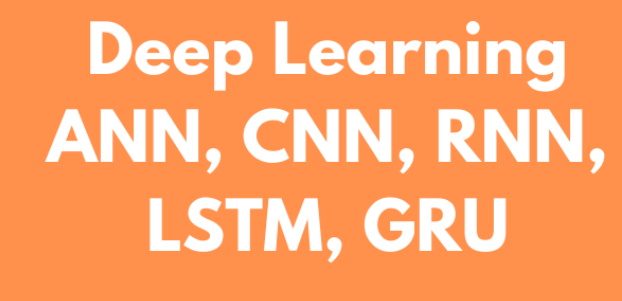
Deep Learning
Build powerful neural networks and AI models with TensorFlow and PyTorch.
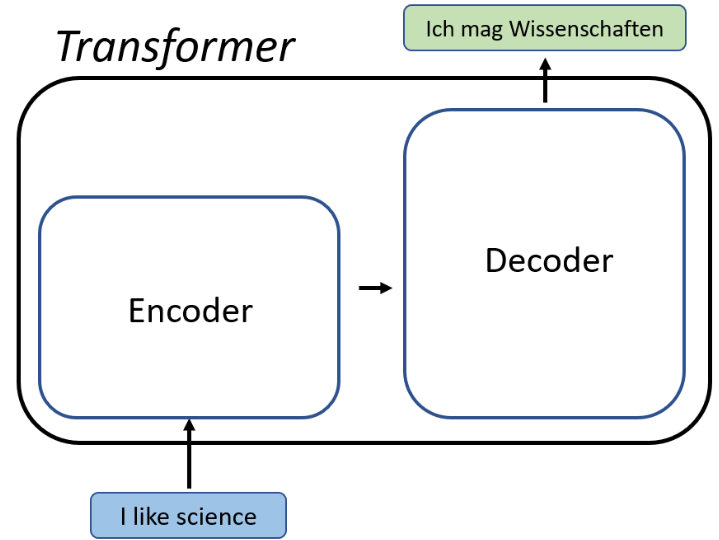
Transformers & NLP
Work with Hugging Face models and cutting-edge NLP techniques.
Large Language Models
Develop and fine-tune LLMs for advanced AI applications.
Flask Development
Build REST APIs and web applications using Flask and FastAPI.
Cloud Computing
Deploy and manage applications on AWS, Azure, and Google Cloud.
Interview Process
Concepts
Explain to humans with verbal communication using pen and paper.
Coding
Write the code using an IDE to build logic and get the desired output.
Projects
Explain the outcome and break it into modules.
Self-Assessment Table
S.NO
Topics
Duration
Completed
1
Python Basics & OOP Concepts
1 Week
2
Python Modules: Web Scraping, Regex, OS, Collections
1 Week
3
Data Analysis & Visualization: Numpy, Pandas, Matplotlib, Seaborn
1 Week
4
SQL: Query Writing, Window Functions, Joins
1 Week
5
Machine Learning with Scikit-learn
1 Week
6
Python Libraries: OpenCV, Pillow, NLTK
1 Week
7
Deep Learning: ANN, CNN, RNN
1 Week
8
Word Embeddings & Transformers
1 Week
9
Large Language Models (LLMs): Deployment, Prompt Engineering
1 Week
10
LangChain & AI Agents
1 Week
11
Web Development: HTML, CSS, Flask, Streamlit
1 Week
12
Cloud Deployment & DevOps: AWS, Azure, GCP
1 Week
Top 20 Python Coding Interview Questions
#
Question
1
Reverse a String without using built-in functions.
2
Check if a given string or number is a palindrome.
3
Calculate the factorial of a number using recursion and iteration.
4
Print the Fibonacci series up to n terms.
5
Determine if a given number is prime.
6
Find the largest and smallest numbers in a list without built-in functions.
7
Remove duplicate elements from a list while maintaining order.
8
Find the second largest number in a list without sorting.
9
Check if two strings are anagrams of each other.
10
Merge two sorted lists into a single sorted list.
11
Find the missing number in an array of numbers from 1 to n.
12
Detect the duplicate number in a list.
13
Find the intersection of two lists.
14
Group anagrams from a list of words.
15
Implement a Stack and Queue using Python lists.
16
Reverse a linked list iteratively and recursively.
17
Find the first non-repeating character in a string.
18
Find the longest substring without repeating characters.
19
Implement binary search on a sorted list.
20
Sort a dictionary by its values in ascending or descending order.
Top 20 NumPy & Pandas Interview Coding Questions
#
Question
1
How do you create a NumPy array from a list?
2
How do you create an array of zeros, ones, and random numbers in NumPy?
3
How to find the shape, size, and type of a NumPy array?
4
How do you perform element-wise operations in NumPy?
5
How do you reshape a NumPy array?
6
How to filter elements from a NumPy array using a condition?
7
How do you perform matrix multiplication in NumPy?
8
How do you find the mean, median, and standard deviation of a NumPy array?
9
How to find unique elements and their counts in a NumPy array?
10
How do you merge two NumPy arrays?
11
How to create a Pandas DataFrame from a dictionary?
12
How do you read and write a CSV file using Pandas?
13
How to select specific rows and columns from a Pandas DataFrame?
14
How to filter rows in a DataFrame based on a condition?
15
How do you group data in Pandas and apply aggregate functions?
16
How do you handle missing values in a Pandas DataFrame?
17
How to apply a function to each row or column in a Pandas DataFrame?
18
How do you merge and join two DataFrames in Pandas?
19
How to sort values in a DataFrame based on a column?
20
How do you reset the index of a Pandas DataFrame?
Top 10 MySQL Interview Questions
#
Question
1
How do you retrieve all records from a table?
2
How do you find the second highest salary from an "employees" table?
3
How do you count the number of employees in each department?
4
How do you find duplicate records in a table?
5
How do you retrieve the top 5 highest-paid employees?
6
How do you find employees who joined in the last 6 months?
7
How do you get the department with the highest number of employees?
8
How do you find employees whose names start with 'A'?
9
How do you retrieve the average salary of each department?
10
How do you delete employees with NULL email addresses?
Top 10 Web Scraping Interview Questions (HTML, Requests, BeautifulSoup)
#
Question
1
What is web scraping, and why is it used?
2
How do you send an HTTP request in Python using the requests module?
3
How do you parse HTML content using BeautifulSoup?
4
What are the different ways to find elements in BeautifulSoup?
5
How do you extract all links from a webpage using BeautifulSoup?
6
What is the difference between find() and find_all() methods in BeautifulSoup?
7
How do you handle JavaScript-rendered content when web scraping?
8
How do you handle pagination while scraping multiple pages?
9
How do you deal with CAPTCHAs and IP blocking while web scraping?
10
What are the legal and ethical considerations of web scraping?
Top 20 Machine Learning Interview Questions (Supervised & Unsupervised Learning)
#
Question
Type
1
What is Supervised Learning, and how does it differ from Unsupervised Learning?
SL & UNSL
2
What are some common algorithms used in Supervised Learning?
SL
3
Can you explain the difference between Classification and Regression?
SL
4
What are some real-world applications of Supervised Learning?
SL
5
What are the most commonly used algorithms in Unsupervised Learning?
UNSL
6
How does K-Means clustering work?
UNSL
7
What is the difference between K-Means and Hierarchical Clustering?
UNSL
8
How does Principal Component Analysis (PCA) help in Dimensionality Reduction?
UNSL
9
What is Overfitting, and how can it be prevented in Supervised Learning?
SL
10
How does a Decision Tree work in Supervised Learning?
SL
11
What is the Bias-Variance tradeoff in Machine Learning?
SL & UNSL
12
How does Support Vector Machine (SVM) work in classification problems?
SL
13
What is the difference between Parametric and Non-Parametric models?
SL & UNSL
14
What is Clustering, and how does it differ from Classification?
UNSL
15
How does Reinforcement Learning differ from Supervised and Unsupervised Learning?
SL & UNSL
16
What are the common evaluation metrics for Classification models?
SL
17
What is DBSCAN, and how does it work for clustering?
UNSL
18
How does Neural Networks fit into Supervised Learning?
SL
19
What is Anomaly Detection, and which Unsupervised Learning algorithms are used for it?
UNSL
20
How does t-SNE differ from PCA in dimensionality reduction?
UNSL
Top Deep Learning Interview Questions (ANN, CNN, RNN, Keras & PyTorch)
#
Question
Category
1
How do you build an Artificial Neural Network (ANN) using Keras?
ANN, Keras
2
Write a CNN model in PyTorch to classify images from the CIFAR-10 dataset.
CNN, PyTorch
3
Explain the difference between LSTM and GRU. How would you implement both in Keras?
RNN, Keras
4
How do you fine-tune a pre-trained CNN model (like ResNet) using PyTorch?
CNN, PyTorch
5
How can you implement batch normalization in a neural network using Keras?
ANN, Keras
6
Write a PyTorch DataLoader for custom image datasets with augmentation.
CNN, PyTorch
7
How do you implement an RNN in Keras to generate text from a given dataset?
RNN, Keras
8
Explain the concept of transfer learning and demonstrate it using Keras.
CNN, Keras
9
How do you use PyTorch to train a deep learning model on a GPU?
PyTorch
10
Implement a bidirectional LSTM model using Keras.
RNN, Keras
11
What are activation functions in deep learning? When should you use each one?
Activation Functions
12
Compare different activation functions: ReLU, Sigmoid, Tanh, Softmax.
Activation Functions
13
When should you use ReLU vs. Leaky ReLU vs. ELU?
Activation Functions
14
What is the vanishing gradient problem? How do activation functions help solve it?
Activation Functions
15
What are optimizers in deep learning? Explain their role in training.
Optimizers
16
Compare different optimizers: SGD, Adam, RMSprop, Adagrad.
Optimizers
17
When should you use SGD vs. Adam?
Optimizers
18
What is learning rate scheduling? How does it affect optimizers?
Optimizers
19
Explain weight initialization techniques in deep learning.
Optimization Techniques
20
How do dropout and batch normalization improve model performance?
Regularization
Top 20 Interview Questions on Transformers (Encoder, Decoder, Encoder-Decoder)
#
Question
Category
1
Explain the architecture of the Transformer model.
General
2
What is the difference between an encoder and a decoder in Transformers?
Encoder vs. Decoder
3
How does self-attention work in the Transformer encoder?
Encoder
4
What is masked self-attention in the Transformer decoder?
Decoder
5
Explain multi-head attention and its significance in Transformers.
General
6
Why do Transformers use positional encodings?
General
7
What is the role of feedforward layers in the Transformer model?
General
8
How does cross-attention work in an encoder-decoder Transformer?
Encoder-Decoder
9
What are some real-world applications of pure encoder-based Transformers?
Encoder
10
How is an autoregressive decoder different from an encoder in Transformers?
Decoder
11
What is the difference between BERT and GPT in terms of architecture?
Encoder vs. Decoder
12
How does the Transformer model scale with respect to large datasets?
General
13
Explain the working of the encoder-decoder attention mechanism in Transformers.
Encoder-Decoder
14
How is the transformer decoder used in sequence generation tasks?
Decoder
15
What are some optimizations used in Transformers like GPT-4?
General
16
Why do encoder-based models (like BERT) work well for classification tasks?
Encoder
17
How does Transformers' training process differ from RNN-based models?
General
18
Explain the impact of Transformer architectures on NLP advancements.
General
19
What is the importance of layer normalization in Transformer models?
General
20
Compare the training efficiency of encoder-only, decoder-only, and encoder-decoder Transformers.
Encoder-Decoder
Top 10 Coding Questions on Transformers (Encoder, Decoder, Encoder-Decoder)
#
Question
1
Implement a Transformer Encoder from scratch using TensorFlow/Keras.
2
Write a Transformer Decoder class in PyTorch.
3
Build an Encoder-Decoder Transformer model using TensorFlow.
4
Implement Self-Attention mechanism in a Transformer model.
5
How do you apply Positional Encoding in a Transformer?
6
Write code to fine-tune a Hugging Face Transformer model on a custom dataset.
7
Explain and implement multi-head attention in PyTorch.
8
How do you mask sequences in a Transformer model during training?
9
Implement Transformer-based text classification using TensorFlow/Keras.
10
Write a script to generate text using GPT-style Transformer models.
Top 20 Interview Questions on Custom LLMs (Fine-tuning & Deployment)
#
Concepts & Coding Questions
1
Explain the architecture of Meta’s LLaMA models.
2
What are LoRA and QLoRA, and how do they optimize LLM fine-tuning?
3
Write Python code to fine-tune a LLaMA model using Hugging Face’s `transformers` library.
4
How do you prepare a dataset for fine-tuning an LLM? Provide an example.
5
Explain the difference between pre-training and fine-tuning in LLMs.
6
Write a script to load and test a fine-tuned Meta LLaMA model.
7
What are PEFT (Parameter Efficient Fine-Tuning) methods, and why are they used?
8
How do you deploy a fine-tuned LLM on AWS/GCP/Azure?
9
Write a Dockerfile for deploying a fine-tuned LLaMA model using FastAPI.
10
How do you optimize an LLM for inference speed and memory usage?
11
Write code to quantize a fine-tuned LLM using `bitsandbytes`.
12
How do you use `transformers` and `accelerate` to speed up fine-tuning?
13
Explain the role of embeddings and tokenization in LLM training.
14
How do you train a custom tokenizer for a new domain-specific LLM?
15
What are the advantages of using Hugging Face’s `Trainer` API?
16
Write a script to train an LLM using DeepSpeed for better efficiency.
17
How does reinforcement learning with human feedback (RLHF) improve LLMs?
18
What are the security challenges when deploying an LLM?
19
How do you use LangChain to build an LLM-powered chatbot?
20
Write an API using FastAPI to serve predictions from a fine-tuned LLM.
Top 20 Interview Questions on LangChain, CrewAI, and Agents
#
Concepts & Coding Questions
1
What is LangChain, and how does it enhance LLM-based applications?
2
Explain the concept of an "Agent" in LangChain. How does it work?
3
Write Python code to create a simple LangChain agent that answers questions using OpenAI's GPT API.
4
What is CrewAI, and how does it differ from LangChain?
5
How do you define roles and workflows in CrewAI? Provide an example.
6
Write a CrewAI script where multiple agents collaborate to research and summarize a topic.
7
What are the different types of memory in LangChain? When should you use each?
8
How do you integrate LangChain with external APIs and databases?
9
Write a LangChain implementation that stores chat history in a vector database like Pinecone.
10
Explain the difference between `LLMChain` and `AgentExecutor` in LangChain.
11
How does LangChain handle tool-based agents, and what are some common use cases?
12
Write Python code to create a custom LangChain tool for web scraping.
13
What are the best practices for optimizing LangChain applications for speed and cost?
14
Explain how LangChain's `RetrievalQA` works and provide an example implementation.
15
How do you deploy a LangChain-powered application using FastAPI?
16
What are the benefits of using vector databases like FAISS or Pinecone with LangChain?
17
Write Python code to implement a LangChain chatbot that integrates multiple LLMs.
18
How does CrewAI enable multi-agent collaboration, and what are some real-world applications?
19
Explain how to use LangChain’s `MultiPromptChain` to handle different user intents.
20
Write Python code to create a CrewAI pipeline where agents collaborate on document analysis.
Top 10 Interview Questions on HTML, CSS, Flask, and Streamlit
#
Interview Questions
1
What are the key differences between Flask and Streamlit for web application development?
2
How do you structure a Flask project for a scalable web application?
3
What is Jinja2 in Flask, and how does it help with dynamic HTML rendering?
4
Explain the differences between CSS Flexbox and CSS Grid. When would you use each?
5
How does Streamlit handle state management, and what are session states?
6
What are the key differences between Streamlit and Flask when deploying a machine learning model?
7
How do you deploy a Flask application on AWS using Gunicorn and Nginx?
8
What are the advantages of using Streamlit over traditional frontend frameworks like React or Vue?
9
How do you create interactive data visualizations in Streamlit?
10
Explain how Flask’s Blueprint feature helps in modular application development.
Top 10 Cloud-Related Interview Questions for ML, DS, and AI
#
Interview Questions
1
What are the key differences between deploying ML models on AWS, Azure, and GCP?
2
How does serverless computing (AWS Lambda, Azure Functions, Google Cloud Functions) benefit ML applications?
3
What are the advantages of using Kubernetes (K8s) for scaling ML models in the cloud?
4
How does cloud storage (S3, Blob, Google Cloud Storage) handle large datasets for AI/ML workflows?
5
What are the best practices for deploying deep learning models using cloud GPUs and TPUs?
6
Explain how MLOps works in a cloud environment and its importance in production AI pipelines.
7
How do cloud-based AutoML solutions (AWS SageMaker, Google AutoML, Azure AutoML) simplify model building?
8
What are the security challenges when deploying AI models on the cloud, and how do you mitigate them?
9
How do you monitor and optimize ML model performance in cloud environments?
10
What are the cost-saving strategies for running ML and AI workloads on the cloud?